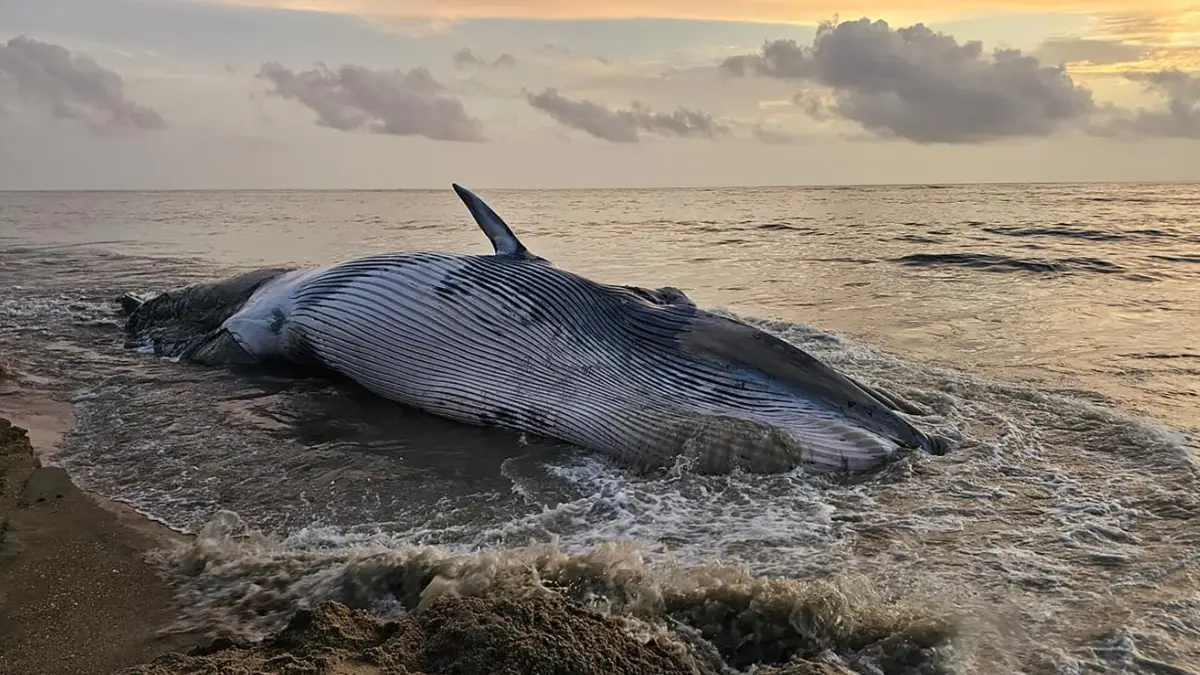
KOCHI. Scientists of ICAR-Central Marine Fisheries Research Institute (CMFRI) have found a ten-fold increase over the last decade in whale stranding along the southwest coast of India, underscoring the urgent need for region-specific conservation strategies in the face of climate change.
Covering the data from 2004 to 2023, the study revealed a sharp spike in strandings of whales from just 0.3% per year during 2003-2013 to 3% per year during 2014-2023, following a range of issues including changes in ocean ecosystems and anthropogenic factors.
Kerala, Karnataka and Goa emerged as the key hotspots for stranding reports together accounting for most of the reported events. High vessel traffic, fishing activity, environmental factors and shallow coastal shelves were identified as contributing factors. Increased social media attention and citizen reporting also increased reporting of stranding events. The study highlighted noise pollution, ship strikes, and habitat degradation are elevating risks for this endangered fauna.
CMFRI study identified Bryde’s whale as the most commonly stranded species with blue whales also occasionally found. The research also observed genetic complexity of Bryde’s whales along the Indian coast, confirming that two distinct forms of the species are present in Indian waters.
Shedding light into the worsening trend, the latest primary survey conducted in 2023 alone registered nine whale strandings, the highest in recent years mainly reported between August and November.
On the link between whale stranding and environmental indicators, the study found that chlorophyll-a concentration, a marker of ocean productivity during the southwest monsoon, had a positive correlation to whale stranding. This suggests that whales are drawn closer to coastal feeding grounds during the monsoon when nutrient upwelling increases plankton and fish abundance. Sea surface temperature (SST) and rising ocean temperature were causing ecological disruptions that increased the stranding, the study found. Strong converging currents also drag the weak or dead animals to shore.
The scientists who carried out the study emphasized the need for predictive models that incorporate satellite data like chlorophyll, wind pattern and SST to anticipate stranding events, allowing for pre-emptive conservation measures.
Dr R Ratheesh Kumar, lead author of the study which was published in ‘Regional Studies in Marine Science’ said: “Region specific conservation strategies are required to address this marine biodiversity threat in one of the country’s richest oceanic zones”. Dr. Ratheesh is the principal investigator of the national research project on ” Marine Mammal Stock Assessments in India”.
This study underscores the urgency of building robust marine mammal conservation infrastructure, especially in biodiversity hotspots like the southwest coast, he added.
The study recommended real-time alerts and marine megafauna conservation networks. Providing training for fishers and officials and improving citizen science platforms for data collection are also critical, the study proposed.