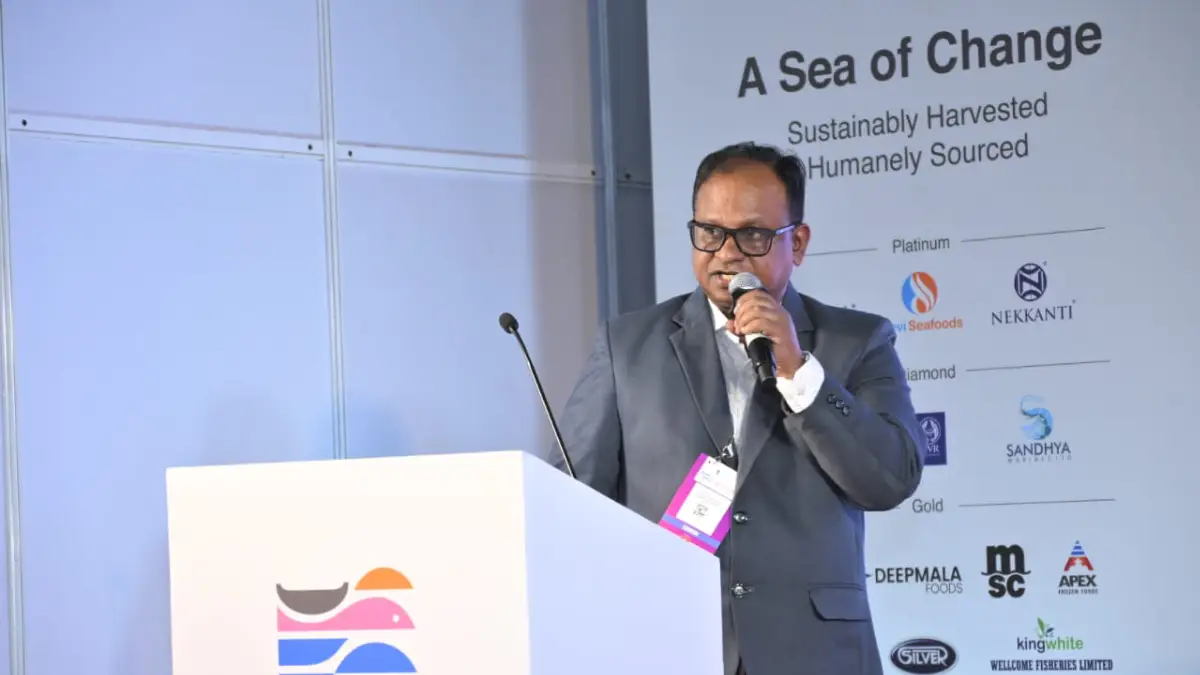
An Interview with Dr. Ranjit Suseelan, Head (India), Marine Stewardship Council (MSC)
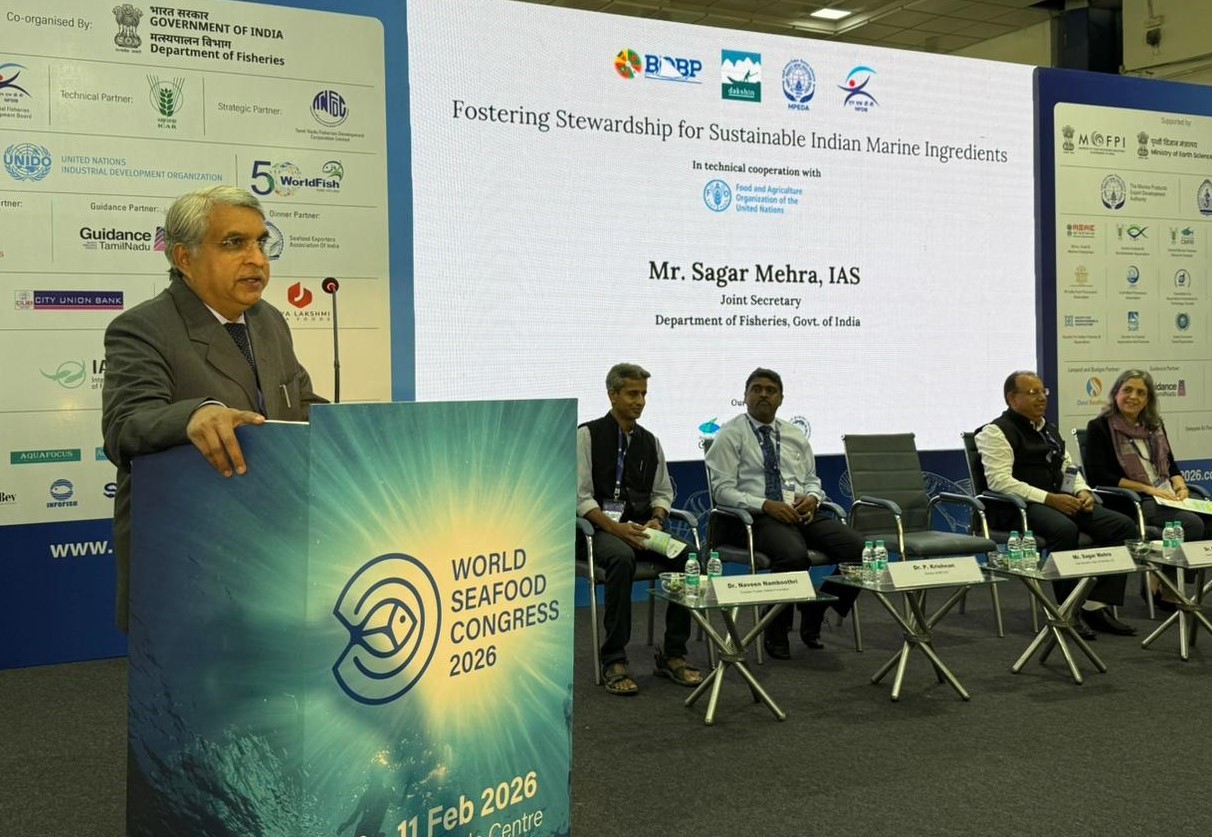
Dr. Ranjit Suseelan was a speaker at a technical session co-hosted by the MSC, SSNI, and SEAI at the World Food India event in New Delhi.
India is a leading global seafood exporter. How does the Marine Stewardship Council (MSC) see its role in boosting India’s seafood sector and ensuring its long-term viability?
Our role is pivotal because MSC certification provides a voluntary, market-based solution to the dual challenge of resource sustainability and trade security. For a major exporter like India, MSC is the key to future-proofing its business. It is an environmental performance certification and ecolabelling program recognized globally.
MSC certification offers four crucial benefits that directly translate into a boost for Indian seafood: access to new and secure markets, enhanced reputation, improved traceability, and the potential for a price premium. If India wants to secure its place in the world’s most discerning seafood markets—Europe, North America, Japan—it must meet the demand for certified sustainable products.
India has a rich, diverse fishery. Which high-value species and regions are currently the focus of the MSC’s efforts here, and what is the involvement of the industry?
Our efforts are highly focused on high-value commercial species that drive India’s export revenue. We began by scanning 30 species and prioritized 13, and currently, 10 key species are being targeted for MSC certification. These projects are being championed by key industry bodies like the Seafood Exporters Association of India (SEAI).
The industry’s commitment, through associations like SEAI, CMPA, and the Surimi Association, is crucial. They understand that this is an investment in their export future.
The certification process can be complex. You mentioned Fishery Improvement Projects (FIPs). Can you explain what these entail and why they are so important for Indian fisheries?
The MSC certification is based on three core Principles: sustainable fish stocks, minimizing environmental impacts, and effective management. If a fishery is not immediately meeting these standards, it enters a FIP, which is essentially a “pathway for improvements”.
FIPs are multi-stakeholder collaborative projects—involving industry, NGOs like WWF, and scientific institutions like CMFRI and CIFT—to close the gaps identified in the fishery. For instance, FIPs in Kerala for shrimp are focused on improving gear selectivity and data collection to reduce ecosystem impact, thereby securing a clean bill of health for export. It is a structured process to ensure the fishery evolves toward global best practices.
India did have an early success story with the Ashtamudi clam fishery in 2014, but it recently lost its certification. What is the status of that fishery, and what lesson does this hold for the wider industry?
The Ashtamudi short-neck clam fishery was a landmark success, becoming India’s first MSC-certified fishery in 2014. However, it lost its certification in 2020. This was a crucial learning point. The loss of certification highlights that sustainability is not a one-time event, but a continuous journey.
The good news is that the fishery, supported by the Ashtamudi Clam Fishermen Development Committee (AFDC) and WWF India, is currently engaged in a recertification process.
Traceability has become a major concern globally, especially in combating Illegal, Unreported, and Unregulated (IUU) fishing. How does the MSC Chain of Custody standard address this for Indian exports?
Traceability is fundamental. The MSC Chain of Custody standard requires that every company in the supply chain—from the boat to the final retailer—is independently audited and certified. This ensures the ability to track seafood products from harvest to consumer.
This system offers confidence to importing governments and retailers that when they buy an Indian product with the blue MSC label, it is fully traceable, legal, and truly sustainable.
Looking ahead to 2025 and 2026, what are your expectations? Will we see a surge in Indian MSC-certified products hitting global shelves?
We are extremely optimistic. We expect to see the next certified Indian fishery emerge in 2025, which would be a significant milestone. The momentum is strong: we have new FIPs starting, including the inland Mud crab fishery in Odisha’s Chilka Lake and work on threadfin bream for the Surimi industry.
With the continued collaboration of the government, scientific institutions, and industry bodies like SEAI, we believe that MSC certification will solidify its position as the standard-bearer for India’s sustainable seafood brand, ensuring that our exports meet and exceed global market expectations for decades to come.